- 37typed requests that built the scene
- 11 min 43 stotal build time, rendering not included
- 2,293editable objects in the final scene
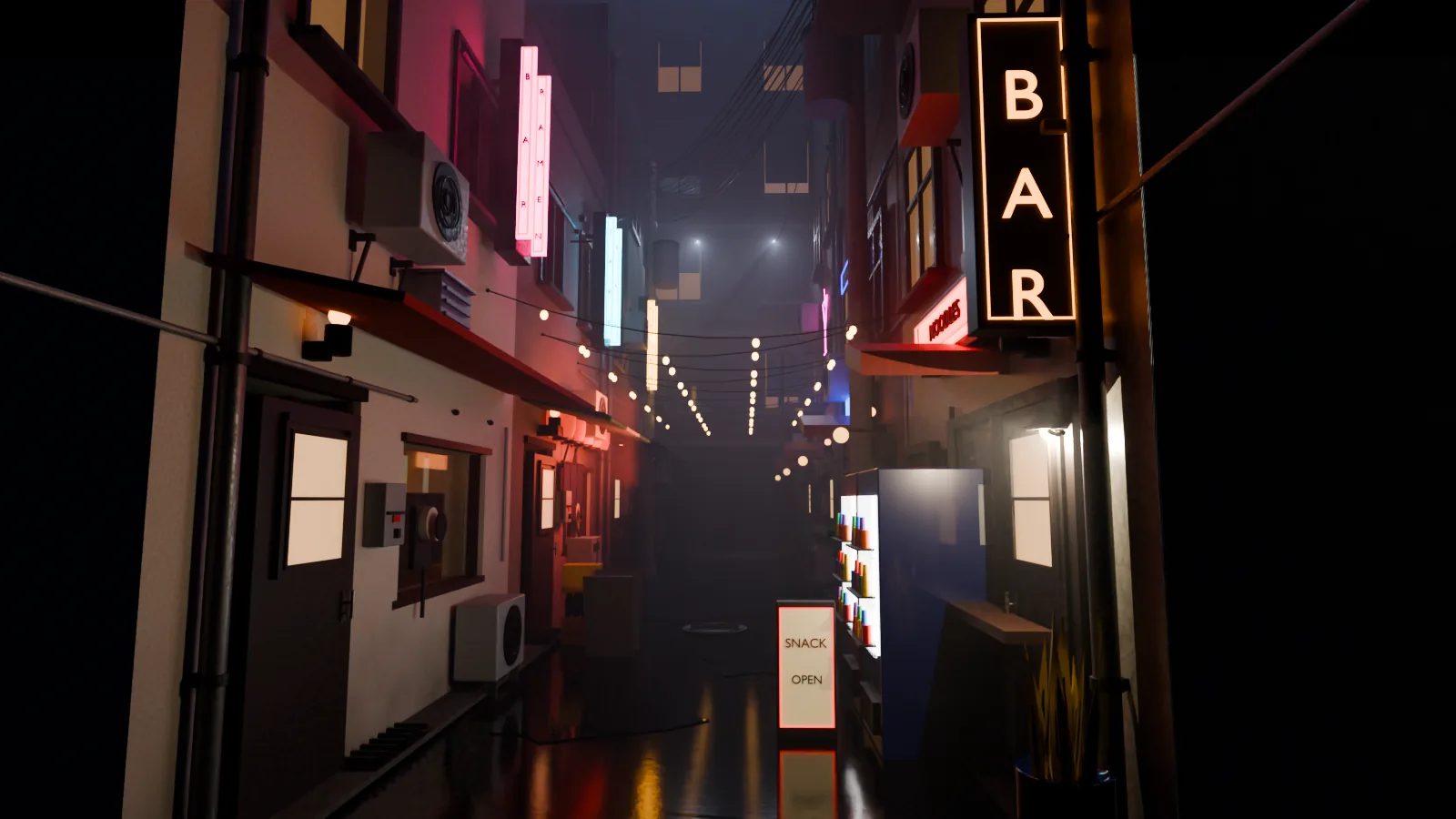
The finished alley
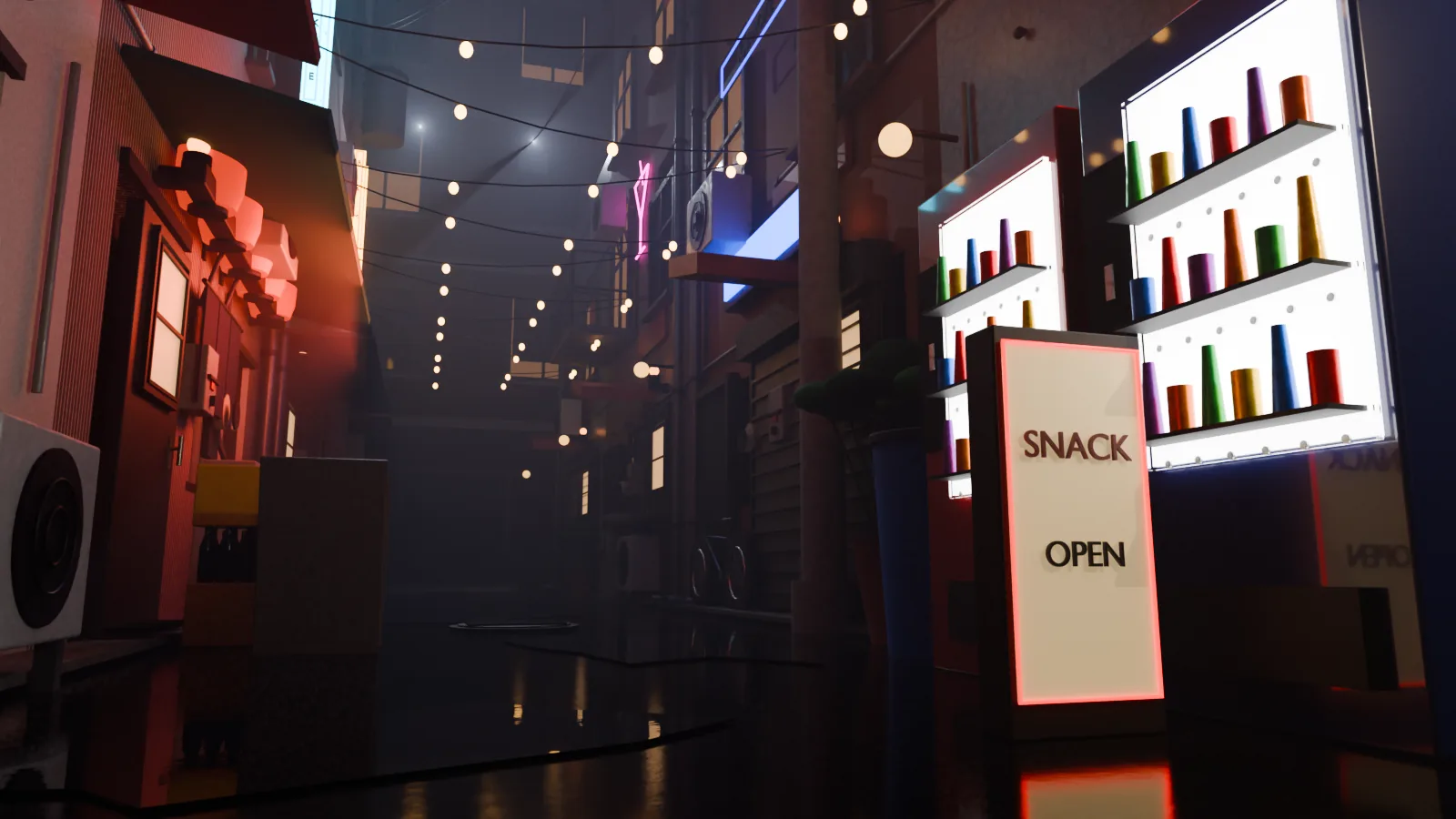
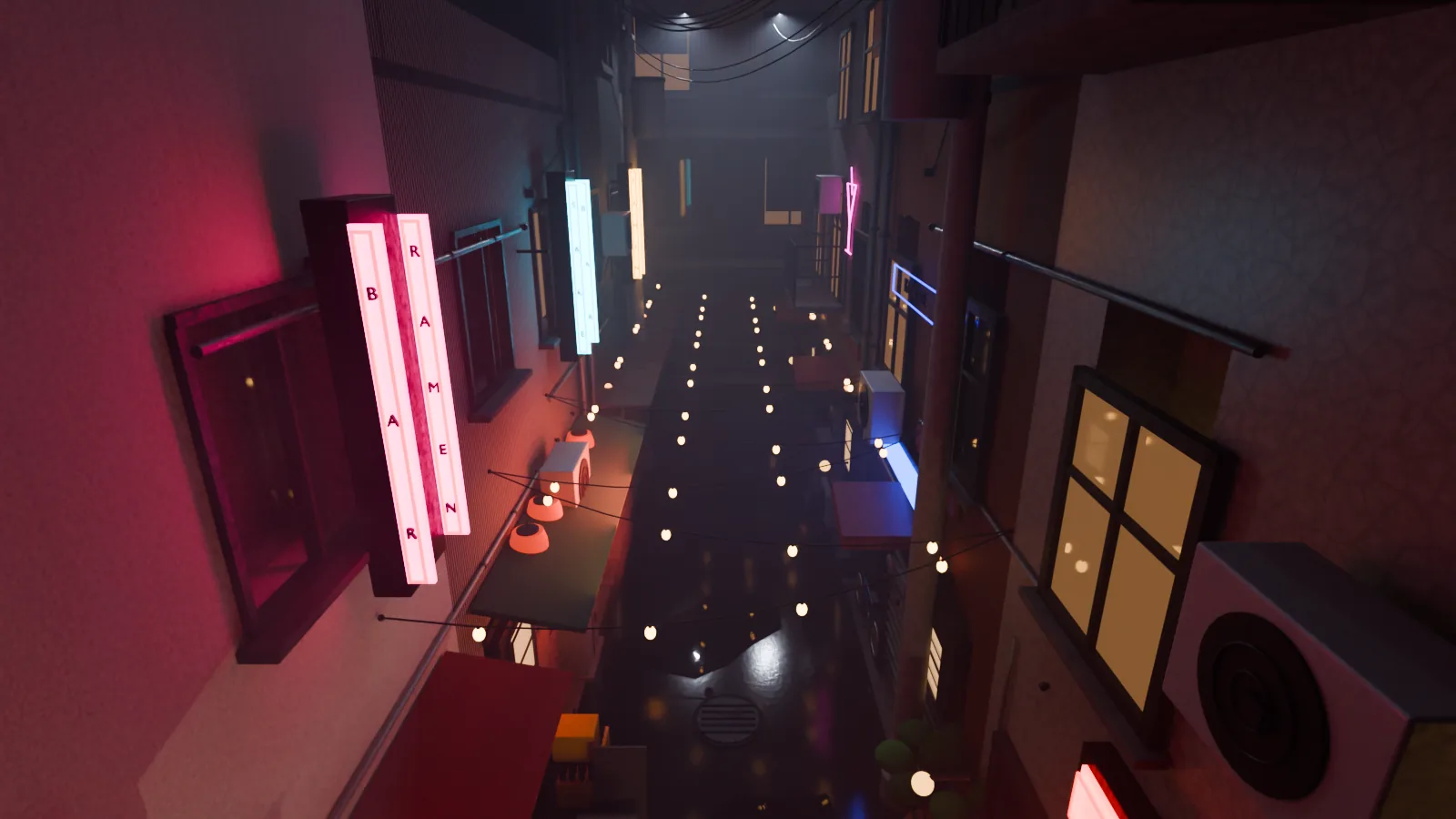
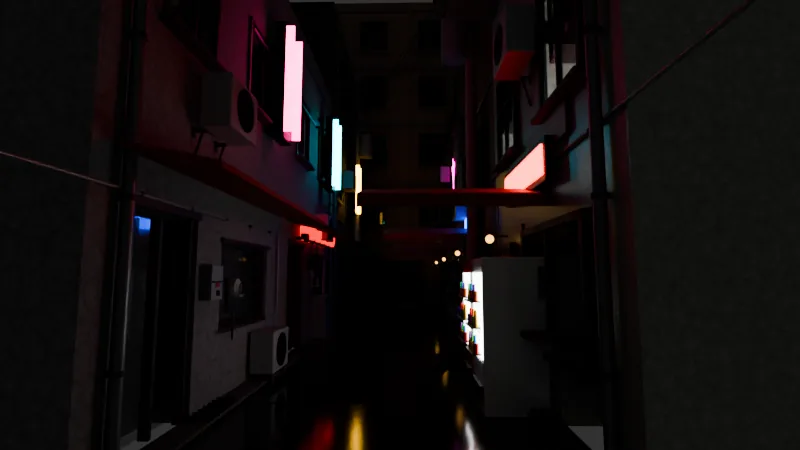
Same scene, two more camera angles. The buildings, signs, lanterns, string lights, vending machines, poles and cables, wet street, mist and night lighting all came from the requests below.
The scene along the way
The scene took 37 requests in all. Here are 7 of them, each with the scene right after it finished. Later requests changed things that were already in the scene.
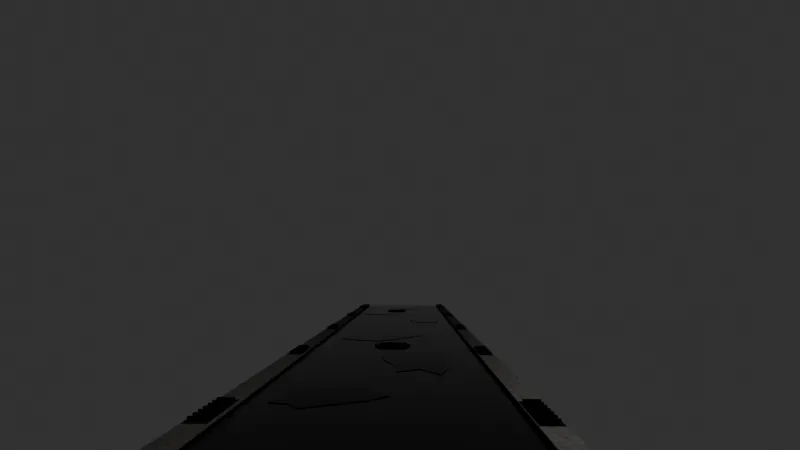
Request 1 19.0 s
Build a narrow back alley in a Tokyo nightlife district, like a film set. The lane is straight, 4 m wide, running 20 m along the Y axis (from y=0 to y=20, centred on x=0). The lane surface is dark asphalt that is wet from rain: almost black and very glossy (roughness about 0.1) so it will mirror lights. Along both edges run a narrow concrete gutter with a metal grate every few metres. Add six irregular puddles of still water lying flat on the asphalt (mirror-like, slightly darker, just above the surface so they do not flicker) and two round manhole covers. Nothing else yet.
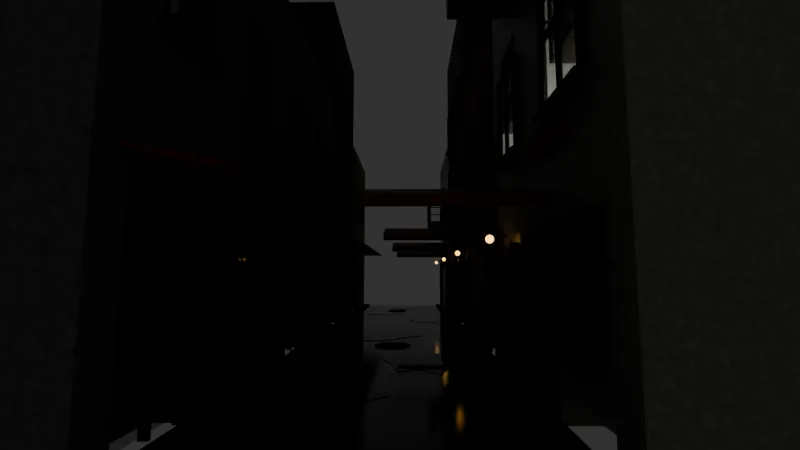
Request 3 41.0 s
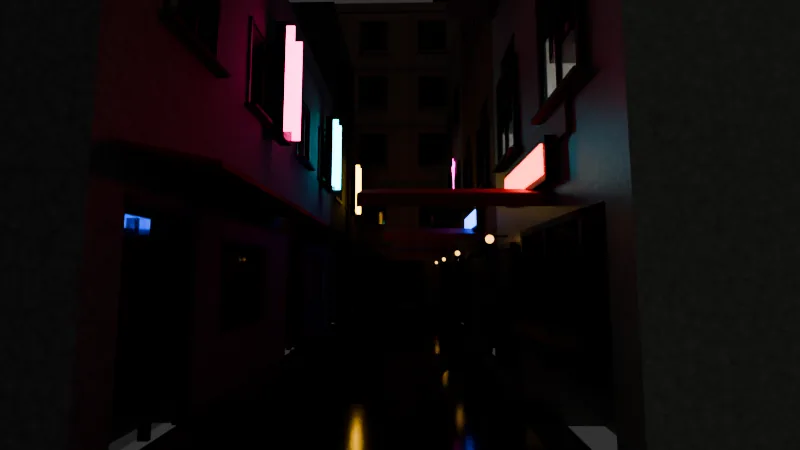
Along the right edge of the lane (x = +2), build a matching row of four narrow two- and three-storey buildings with no gaps from y=0 to y=20, fronts facing the lane (-x). Use different muted colours and materials from the left side (stained white tile, rusty corrugated metal, dark brick). Ground floors are small shop and bar fronts with doors, windows and roll-up metal shutters; upper floors have framed windows and two have small balconies with metal railings.
Request 5 18.7 s
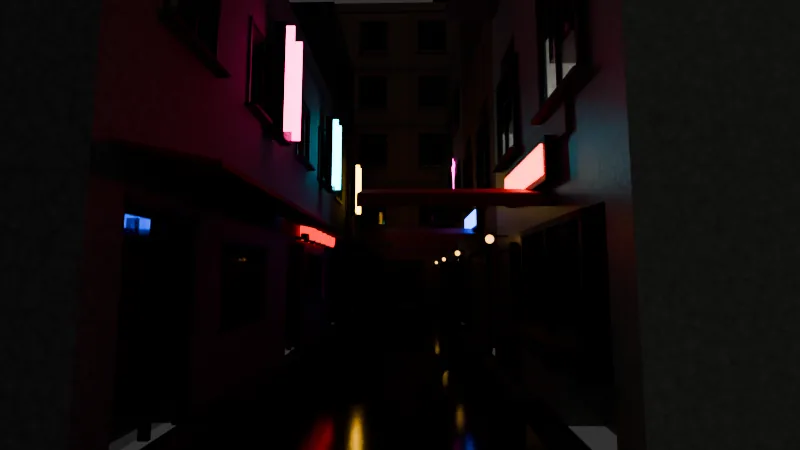
Mount neon signs on the facades. On the left buildings: three vertical sign boxes sticking straight out from the wall into the lane at second-floor height (each about 0.5 m wide, 2 m tall, 0.2 m deep, attached to the wall with metal brackets), each with a dark metal frame and a brightly glowing face, one hot pink, one cyan, one warm yellow. On the right buildings: two horizontal glowing sign boards above shop doors (red and electric blue) and one neon tube outline of a cocktail glass in magenta on a wall. Only the sign faces and neon tubes glow (strong emission, strength about 10); the frames, brackets and walls do not glow.
Request 6 16.3 s
In front of the second bar on the left side, hang a row of five red paper lanterns (Japanese chochin: rounded barrel shapes about 0.35 m wide and 0.5 m tall, with black rims at top and bottom) from a wooden beam under its awning, about 2.3 m above the ground. Only the red paper glows warmly from inside; the rims and the beam do not glow. Over that bar's door hang a dark navy fabric curtain (noren) split into three strips.
Request 9 28.5 s
Stand two grey concrete utility poles close to the walls, one on the right side at y=6 and one on the left side at y=14, each about 9 m tall with crossarms, insulators and a grey cylindrical transformer. String many black power and phone cables between the two poles and from the poles to the buildings' upper walls, crossing above the lane and sagging in gentle curves (thin curves with a small bevel so they render).
Request 10 13.4 s
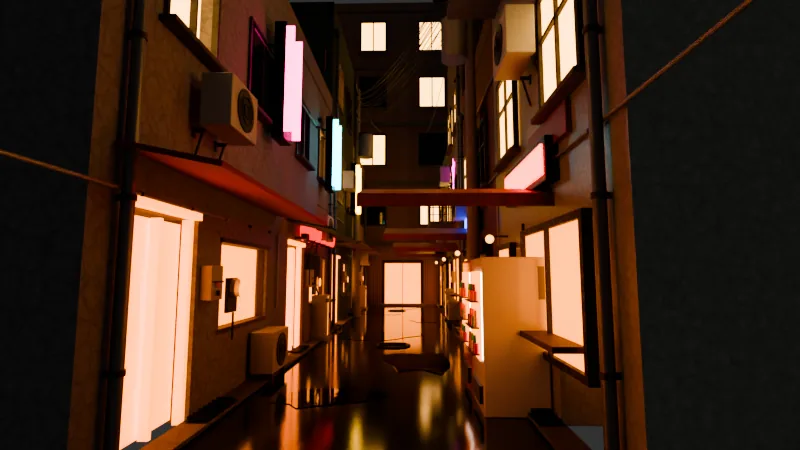
Light the windows: about half of the upper-floor windows on all buildings glow with warm orange-white light from inside (emission behind the glass, some with curtains half drawn), the other windows stay dark glass. The glass doors and shop windows of the bars on the ground floor glow warm amber. Nothing else glows.
Request 16 15.6 s
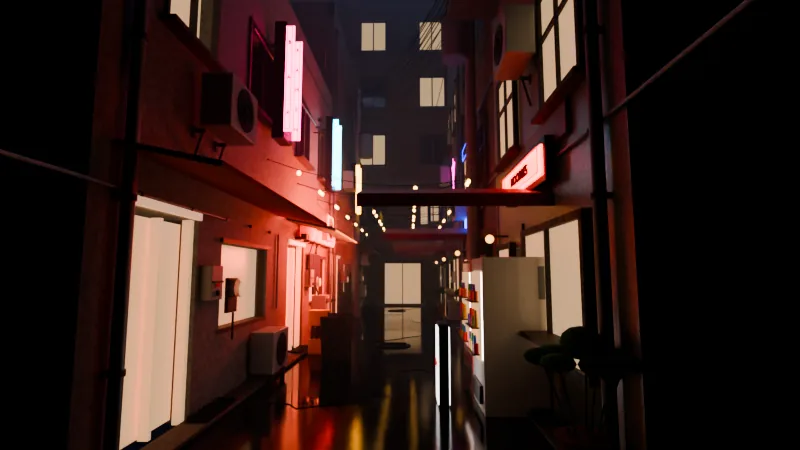
Add a small glowing standing sign box on the ground in front of the first bar on the right (0.4 m wide, 1 m tall, white face with red text SNACK), and two small rectangular hanging signboards on short arms by the upper windows on the left side, one glowing green and one glowing orange. Only the sign faces glow.
What this shows
- You build a scene in stagesStart with the ground, then add one group of things per request. Each request works on the scene that is already there.
- You steer it in plain wordsOne request turned the lanterns a deep red. Another put up a lit BAR sign, and a third gave the doors warm frosted glass with a wooden lattice.
- Everything stays editableThe result is ordinary Blender objects with named materials. Move, reshape or recolor anything by hand afterwards.
- How the pictures were madeFor all pictures the camera position and Cycles render settings were set by hand. Nothing in the scene was edited by hand: the objects, materials, mist and lights in every picture are as the add-on built them.