How to Separate Parts of a Mesh into a New Object in Blender
In Edit Mode, select the vertices, edges or faces you want, then press P and choose Selection. The selected geometry becomes a new object, and the rest stays in the original.
- Mode
- Edit Mode (3D Viewport)
- Menu
- Right-click in the 3D Viewport › Separate
- Shortcut
- P
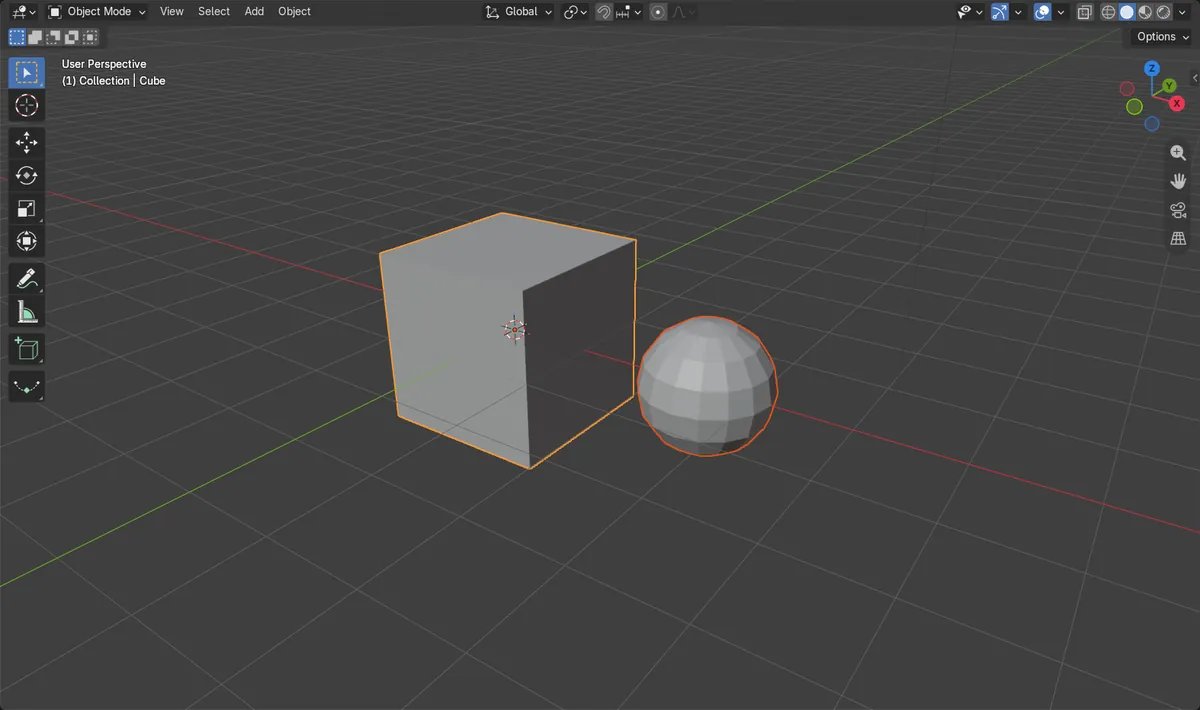
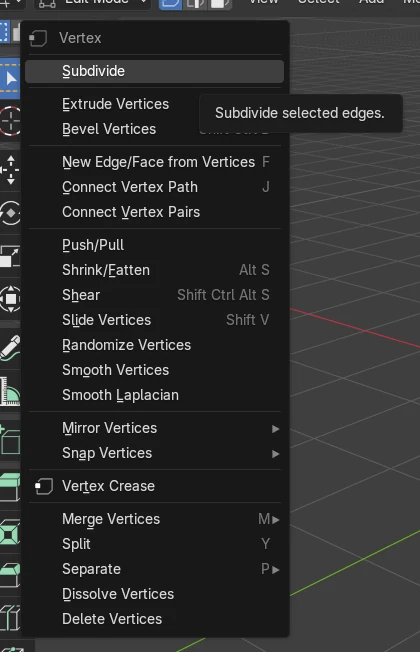
Press P
In Edit Mode, P opens the Separate menu.
Select first
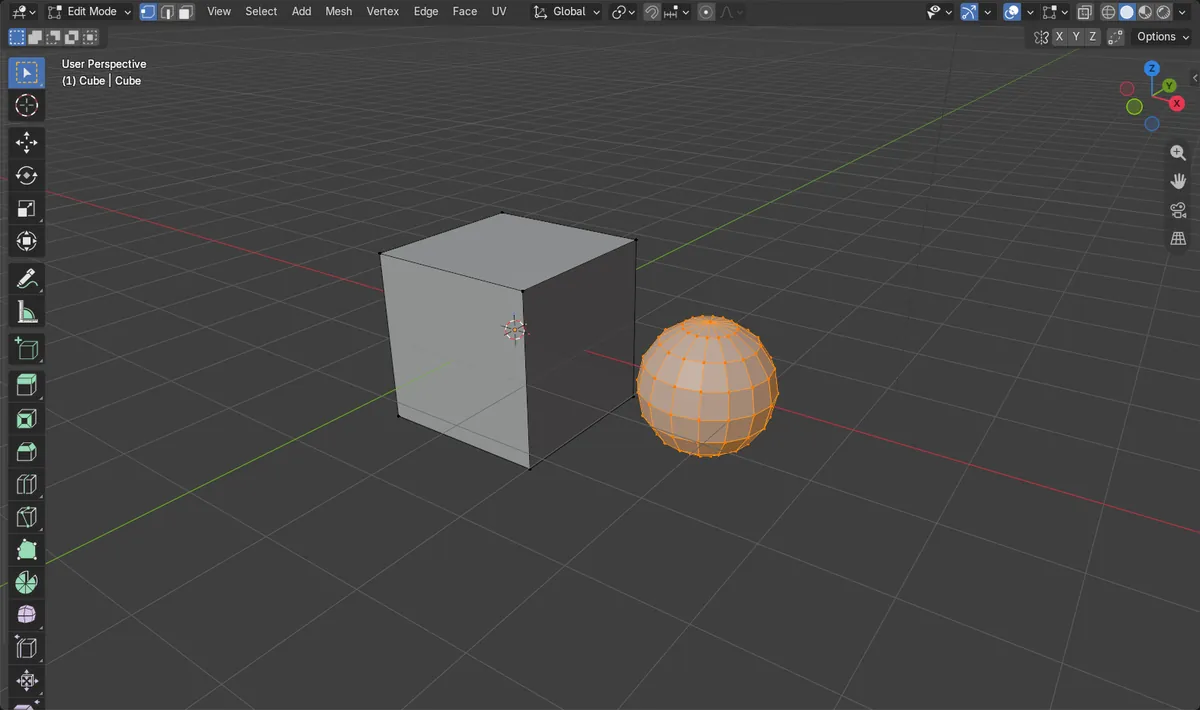
Only the selected geometry moves to the new object.
Nothing is lost
Total vertex count stays the same after the split.
Before and after

AI Scene Builder is a Blender add-on. You type what you want, and it builds it in your scene: buildings, neon signs, wet pavement, fog and lights. Nothing in this picture was modeled by hand.
On a phone now? The add-on runs in Blender on a computer. Send yourself the link and open it there.
Step by step (Blender 5.x)
- Select the mesh object and press Tab to enter Edit Mode.
- Select the geometry to separate. Hover over a connected piece and press L to select it, or press Ctrl + L to extend the selection to everything linked to it.
- With the mouse over the 3D Viewport, press P.
- Choose Selection from the menu that appears.
- Press Tab to return to Object Mode. The new object is listed next to the original, with a name such as Cube.001.
Other ways to do it
- Right-click in the 3D Viewport in Edit Mode and choose Separate, then pick Selection.
- Press Shift + L over a piece to deselect it when you want to refine the selection.
- To merge objects back together, select them in Object Mode and use Join.
Common snags
Nothing happens
You are probably in Object Mode, where P does not open the Separate menu. Press Tab to enter Edit Mode first.
Wrong or empty selection
Separate Selection only moves what is selected. Check the selection first. Use Ctrl + L to include all linked geometry.
Mouse over wrong editor
Keys only work in the area under the mouse. Move the pointer over the 3D Viewport before pressing P.
Or type one line in AI Scene Builder
AI Scene Builder is a Blender add-on that carries out the steps for you from one typed request. For this task, type a request like this one, using your own object names:
Select the vertices, edges or faces in Edit Mode first.
Separate the selected faces of this mesh into a new object A log cabin room built with the add-on from 9 typed requests. See every request →
Questions
What is the shortcut to separate a mesh in Blender?
Press P in Edit Mode with the mouse over the 3D Viewport, then choose Selection.
Does separating delete anything from the original?
The selected geometry moves to the new object and is removed from the original. No geometry is lost, and the total vertex count stays the same.
What the pictures show
- Before: one object, Cube, with 122 vertices (a cube plus a sphere added inside the same mesh).
- After: two objects, Cube with 8 vertices and Cube.001 with 114 vertices.
- The total stayed at 122 vertices, so nothing was lost or duplicated.