Split an Edge in Two in Blender
Select the edge in Edit Mode and choose Edge › Subdivide in the 3D Viewport header. This adds one new vertex at the midpoint and turns the edge into two edges. You can also press Ctrl + E to open the Edge menu and pick Subdivide there.
- Mode
- Edit Mode (Edge select mode)
- Menu
- Edge › Subdivide
- Shortcut
- Ctrl + E (opens the Edge menu)
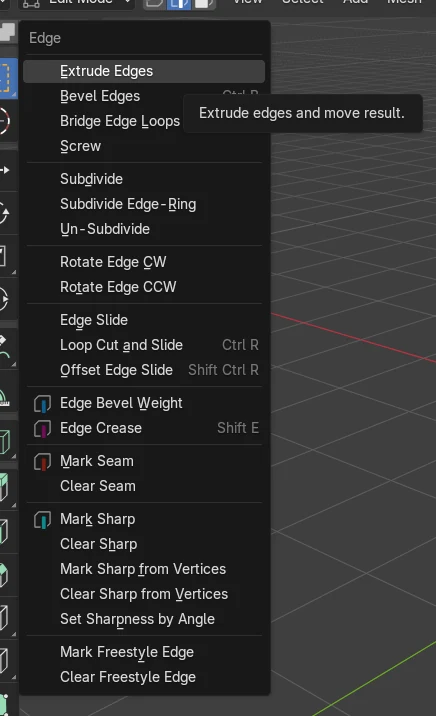
Open Edge menu
Press Ctrl + E over the 3D Viewport. Pick Subdivide.
Edge > Subdivide
Splits each selected edge at its midpoint. Also in the right-click menu.
One new vertex
A default cube edge goes from 1 edge to 2. The new vertex sits halfway.
Before and after

AI Scene Builder is a Blender add-on. You type what you want, and it builds it in your scene: buildings, neon signs, wet pavement, fog and lights. Nothing in this picture was modeled by hand.
On a phone now? The add-on runs in Blender on a computer. Send yourself the link and open it there.
Step by step (Blender 5.x)
- Select the object and press Tab to enter Edit Mode.
- Switch to Edge select mode (the edge icon in the header) and click the edge you want to split.
- Choose Edge › Subdivide in the 3D Viewport header.
- The edge now has a new vertex at its midpoint. Adjust Number of Cuts in the operator panel if you want more than one cut.
Other ways to do it
- Right-click in the viewport in Edit Mode and choose Subdivide.
- Press Ctrl + E over the viewport and choose Subdivide.
- Press Ctrl + R (Loop Cut and Slide) to add a cut loop across a ring of edges instead of one edge.
Common snags
Not in Edit Mode
The Edge menu with Subdivide only appears in Edit Mode. Press Tab with the mouse over the 3D Viewport.
Nothing selected
If no edge is selected, Subdivide has nothing to split. Click the edge first so it is highlighted.
Edge Split is different
Edge Split separates the neighbouring faces so each gets its own copy of the edge. It does not add a midpoint vertex, so use Subdivide for this task.
Or type one line in AI Scene Builder
AI Scene Builder is a Blender add-on that carries out the steps for you from one typed request. For this task, type a request like this one, using your own object names:
Select the vertices, edges or faces in Edit Mode first.
Split the selected edge in two by adding a vertex at its midpoint A log cabin room built with the add-on from 9 typed requests. See every request →
Questions
How do I add a vertex in the middle of an edge in Blender?
Select the edge in Edit Mode and use Edge › Subdivide. A vertex appears at the midpoint.
How do I split an edge into more than two parts?
After running Subdivide, increase Number of Cuts in the operator panel that appears in the viewport.
What the pictures show
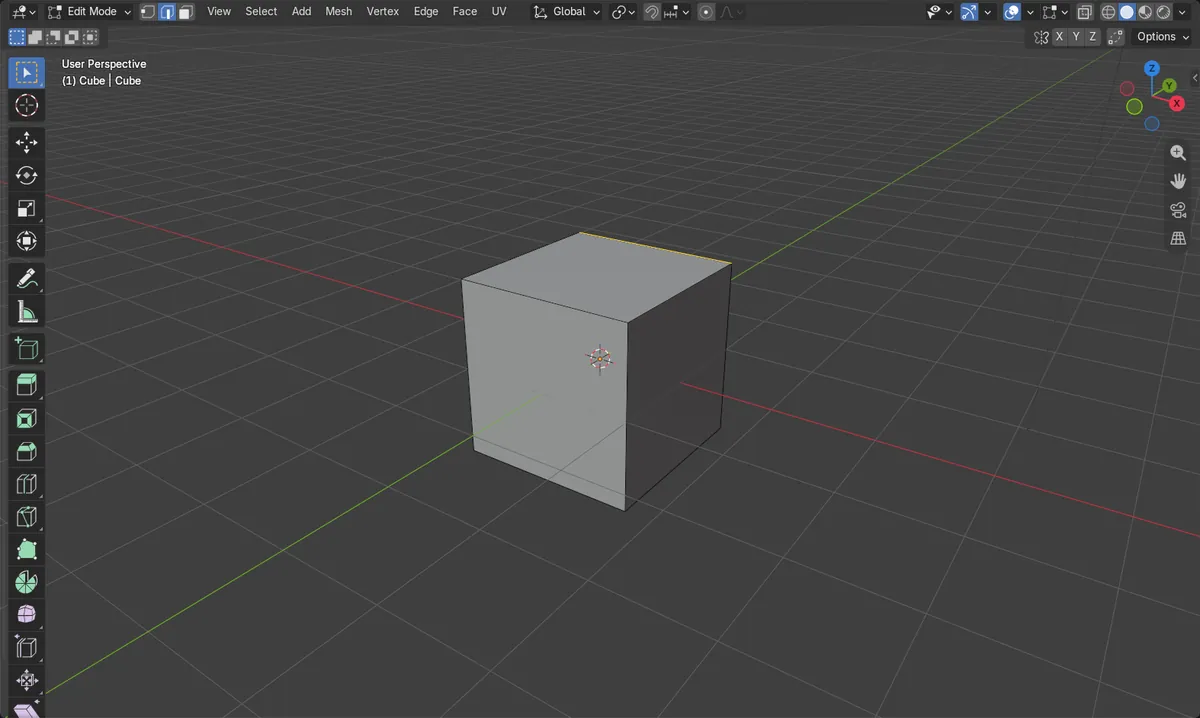
- A default cube with one edge selected had 8 vertices, 12 edges and 6 faces.
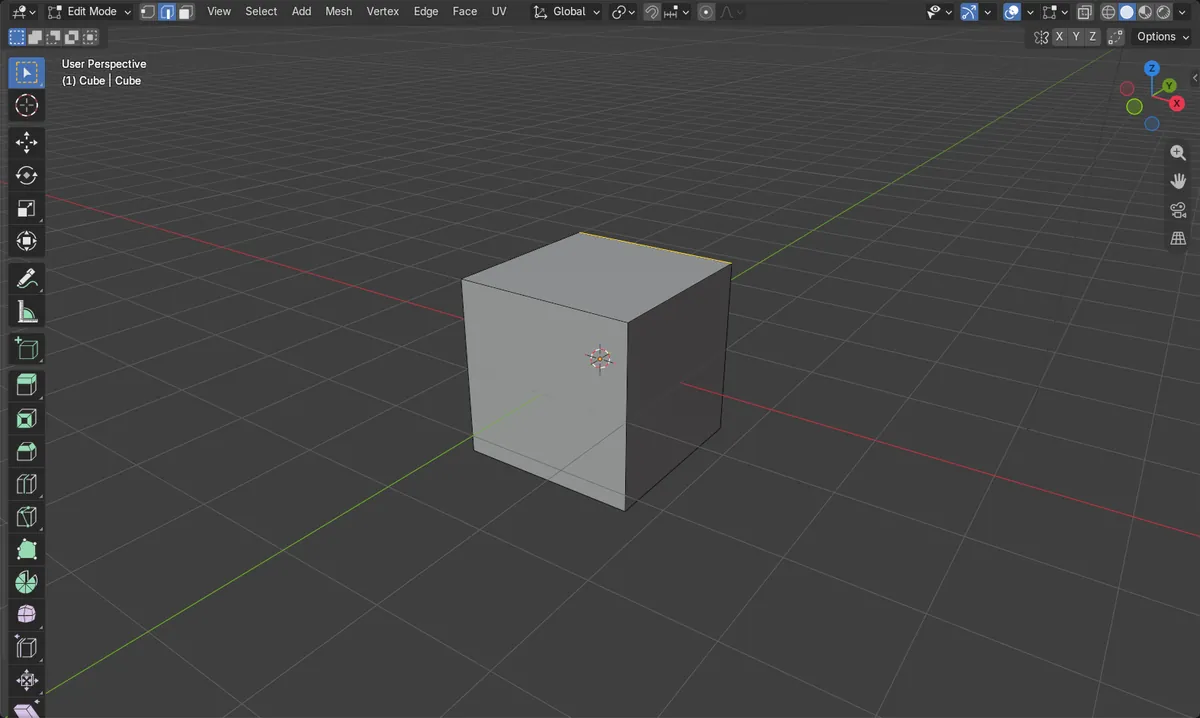
- After Subdivide it had 9 vertices, 13 edges and still 6 faces.
- The new vertex sits at (0, 1, 1) m, the midpoint of the original edge.
- The results were the same in Blender 4.2 LTS and Blender 5.x.